In the Hoop Mug Rug: Embroidery Designer Review
First Impressions and Visual Mood
Opening the In the Hoop Mug Rug file on Creative Fabrica immediately reminded me why I love quilt block–inspired machine embroidery design collections. The mood is cozy, handmade, and gently nostalgic. It does not shout for attention; instead it whispers that someone spent time crafting something thoughtful. The design reads as a classic patchwork block, with clean geometric lines and the kind of balance that feels right at home in a farmhouse kitchen or a modern rustic gift collection.
What struck me first was the versatility hinted at in the product description: it can be a pot holder, a placemat, or a mug rug. That is not a small thing. As a designer, I am always looking for digital embroidery file options that multitask. A single design that can pivot across finished products means fewer file purchases, less mental clutter, and a more cohesive brand look in my shop. Right away, I could see this In the Hoop Mug Rug as a seasonal table accent, a hostess gift, or a quick add-on for a kitchen towel bundle.
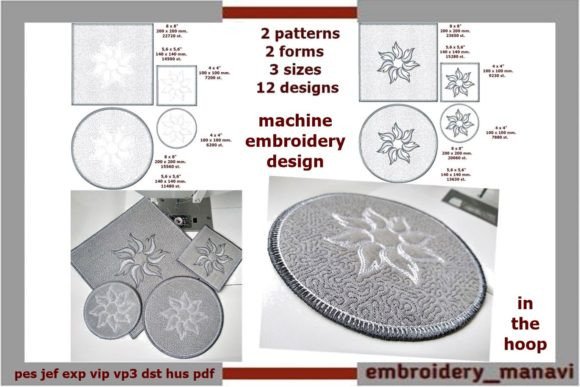
The detail level feels intentional without being fussy. The quilt block motifs rely on crisp satin stitch outlines and open areas that let the fabric show through. This is a true in-the-hoop project, so the construction is built directly on the machine, with photo instructions included. That matters enormously for crafters who want a finished, functional item off the hoop without extra sewing steps. The visual personality is warm and welcoming, not trendy or fleeting, which means products made with this design will age gracefully in a home decor context.
Custom Apparel and Everyday Accessories
I mentally tested the In the Hoop Mug Rug on several substrates I use for client orders. On a sturdy tote bag design, the quilt block aesthetic translates beautifully as a decorative front panel. Because it is an in-the-hoop piece, you can create a freestanding mug rug and then attach it, or stitch the entire project onto a base fabric. I would lean toward making the mug rug separately and then securing it to the bag with a few hand stitches for a layered, boutique look. The same approach works for aprons and pillow covers, where a removable or attached accent becomes a selling feature.
For sweatshirt embroidery, I would hesitate to use this as a direct chest design. The dense quilt block construction, with its layered fabric and internal seams, may feel too heavy on a stretchy knit. However, a patch-style application onto a sweatshirt sleeve or a canvas jacket? Absolutely. The embroidered patch possibility is strong. By stitching the mug rug on a stable woven base and then trimming it, you create a structured patch that can be stitched onto caps, denim jackets, or even a baby blanket corner. The key is to treat the In the Hoop Mug Rug not as a flat embroidery but as a small constructed textile piece that opens up mixed-media potential.
Kitchen and Home Decor Staples
This is where the design truly belongs. A kitchen towel with a coordinating mug rug feels like a complete handmade gift. I can easily see a set of two mug rugs paired with a matching or contrasting towel, packaged with a tag that says “slow mornings.” The In the Hoop Mug Rug gives that kind of narrative. When I prepare handmade product listings for Etsy or craft fair tables, I know that items with a story move faster. A pot holder and mug rug duo suggests a ritual, not just a thing.
For nursery decor or baby items, the design can be softened with pastel fabrics and used as a surface-safe placemat for a toddler table. The fact that it is an in-the-hoop project means the edges are finished, so there is no raw fraying risk. That is a huge plus for parents who want practical, washable charm. I would avoid using it as a super thick pot holder for heavy cast iron, but for a teapot or a coffee mug, the insulation is adequate if you choose the right batting inside the hoop.
Navigating the Tricky Bits: Small Hoops, Dense Stitches, and Fabric Choices
Every embroidery designer knows that the description on screen rarely tells the whole story. With the In the Hoop Mug Rug, I could not guess stitch count or hoop size from the product page snippet, so I always recommend checking the full details on Creative Fabrica before downloading. Small hoop sizes can be a limitation. If the mug rug requires a 5x7 or larger hoop, that instantly narrows the audience. Many home embroiderers work with a 4x4, and I would not want to assume this fits without confirming. The photo instructions that come with the file are a good sign—typically, a well-documented in-the-hoop project includes hoop size, fabric requirements, and cutting templates.
Stitch density is another practical concern. Quilt block designs often pack a lot of thread into small geometric areas. I would test on scrap fabric first, especially if I intended to stitch on dark fabric where high contrast thread can highlight any puckering. A dense fill stitch over a thick batting can cause the finished piece to cup slightly. My fix: use a lightweight cotton batting, not a heavy fleece, and a good quality stabilizer underneath. A tear-away or a wash-away works well for in-the-hoop projects because the back needs to be clean for a mug rug that will be seen from both sides.
Thread color contrast is the quiet hero here. The quilt block motifs rely on the interplay of fabric and thread. I always test a dark version and a light version on my phone screen before committing to a final palette. With the In the Hoop Mug Rug, I would choose thread colors that either blend with the fabric for a subtle tone-on-tone look or pop boldly for a modern graphic feel. A running stitch outline in a contrasting color can define the quilt block sections without adding bulk, and I suspect the design uses a mix of satin stitch and running stitch for the detailing. If there is any tiny lettering or small decorative elements, I would inspect those closely on a test stitch. Tiny text that looks crisp in a digital mockup can close up with the wrong thread or stabilizer, so I always check the smallest details before using any embroidery file for a customer order.
For stretchy fabric applications, like a onesie or a ribbed knit, I would not hoop the garment directly. Instead, I would make the mug rug as a standalone piece and then attach it. This avoids distortion and makes the item more durable. Curved cap surfaces are also tricky; the flat, rigid nature of a finished mug rug might not conform well to a cap crown. I would stick to flat surfaces or use it as a patch on a structured cap panel.
Commercial Value and Brand Impact
When I evaluate a design like the In the Hoop Mug Rug for my commercial embroidery line, I ask one question: does it make my finished product look more expensive? Here, yes. The quilt block construction gives a handmade, heirloom feel that elevates a simple mug rug into a small luxury. That perception allows me to price sets higher and build buyer trust. A customer who sees a neatly finished, double-sided mug rug with visible stitching quality will likely return for a matching set or a seasonal refresh.
For Etsy listings and boutique merchandise, the In the Hoop Mug Rug photographs beautifully. I can style it with a handmade mug, a cinnamon stick, and a linen napkin, and the product practically sells itself. Product photography is easier when the item has texture and dimension, and this design delivers both. A printable mockup can also be created from a well-lit photo, which is useful for digital product sellers who want to offer a handmade physical item alongside a digital listing.
Brand consistency is another win. Because the design is a quilt block, I can easily adapt it to different fabric collections—seasonal, modern, rustic—without losing the recognizable silhouette. That means a spring mug rug in floral cotton and a winter version in deep plaids still feel like part of the same family. Giftability soars when a customer can pick a mug rug that matches their friend’s kitchen palette.
I do recommend checking the Creative Fabrica embroidery license details carefully before selling finished items. Commercial use terms vary, and while Creative Fabrica often allows commercial use of designs, I never assume. I confirm the license on the product page and keep a copy of the file details for my records. This protects my shop and keeps everything above board.
Practical Embroidery Notes for a Smooth Workflow
Before you thread your needle, here are the steps I follow when working with any new digital embroidery file, including the In the Hoop Mug Rug:
- Test on scrap fabric first. Use the same fabric and batting you plan to use in the final product.
- Check thread color contrast on both light and dark fabric mockups. A quick digital preview helps, but nothing beats a stitched sample.
- Review stitch density in the file. If the design feels too dense in a small area, consider adjusting the stitch count or choosing a thinner thread.
- Confirm hoop size on the product page before downloading. The in-the-hoop nature means the file is likely sized for a specific hoop, and you don’t want surprises.
- Use proper stabilizer. For mug rugs, I prefer a medium-weight cutaway or tear-away, depending on the fabric density. A wash-away topping can keep stitches from sinking into napped fabrics.
- Inspect small details after stitching. Look at the corners, the intersections, and any tiny elements. If something looks off, adjust tension or thread weight for the next run.
- Check file details and licensing on Creative Fabrica. Make sure the formats are compatible with your machine and that commercial use is allowed for your intended purpose.
Final Thoughts on the Design
The In the Hoop Mug Rug is not a flashy, decorative-overload kind of design. It is a quiet, practical, and elegant applique design at heart, disguised as a quilt block. It fits naturally into the House category and makes sense for anyone who loves Embroidery that serves a purpose. I would not hesitate to use it for a client’s kitchen collection, a personalized housewarming gift, or a seasonal craft fair lineup. The photo instructions included with the file add a layer of confidence, especially for embroiderers who are newer to in-the-hoop construction.
As with any Creative Fabrica embroidery download, the real value emerges when you adapt it to your own fabric stash and creative vision. This design is a strong foundation, not a finished product. Stitch it, wash it, photograph it, and see how it feels in your hands. If it brings a little more warmth to your handmade offerings, then it is worth every thread snip.