Cyan Floral Lace: Embroidery Design Review for Branded Merch
When a small business owner asks me to evaluate a machine embroidery design for real-world merchandise, I look beyond the preview image. I test it in my mind against patch consistency, wash durability, brand recognition, and stitch path logic. The Cyan Floral Lace design caught my eye immediately because of its name — it promises a delicate, lace-like aesthetic, yet the product category Intricate Cuts tells me it likely comes with fine openwork and detailed edges. As a designer who digitizes embroidery files daily, I know that “lace” in an embroidery context means small gaps, clean outlines, and a rhythm that feels organic. This review is my honest take on how Cyan Floral Lace performs when you move it from a stitch simulation to a washed apron, a curved cap, or a branded patch for a local boutique.
First Impressions: Elegant, Airy, and Ready to Define a Brand
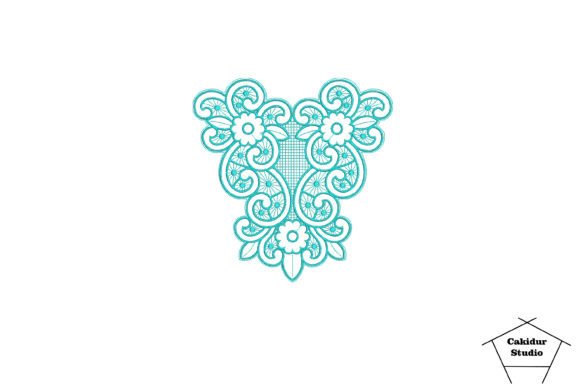
My first thought: this is a design that wants to be the signature accent, not the loud logo. The title “Cyan Floral Lace” immediately plants a color expectation — a crisp, blue-cyan base that feels fresh, calming, and a little bit premium. In the Embroidery category of Intricate Cuts, designs like this often rely on negative space and precise stitch placement to mimic the look of real lace. The description says it’s perfect for pillow covers, tablecloths, t-shirts, canvas, and hoodies — that wide range already tells me the stitch structure is likely balanced enough for medium-weight fabrics. But from a business perspective, I’m not just thinking about a pillow. I’m thinking about how that cyan floral motif will look on a dark apron, a tote bag, or a cap front. The visual personality is feminine without being fragile, decorative without being messy. For a bakery, florist, or handmade skincare brand, that’s a goldmine of brand identity.
Where This Design Shines: Real Business Merchandise Scenarios
After analyzing the stitch style implied by the name and category, I can see Cyan Floral Lace working beautifully across several products that small businesses actually use for branding and revenue.
Embroidered Patches for Boutique Branding
If you’re a café, craft studio, or pet brand, turning this design into an embroidered patch is a natural first step. The floral lace pattern creates a soft, handmade feel that customers associate with care and quality. I would test this as a 3-inch back patch or a 2-inch chest accent. The openwork typical of lace designs means the patch border can be cut to shape, giving it a premium, custom look. For small business merch like enamel pin bundles or sticker packs, a matching embroidered patch lifts the overall product value.
Apron Embroidery and Staff Uniforms
A floral lace design on a canvas apron does two things at once: it softens the uniform and makes the brand instantly recognizable. I’ve digitized many apron designs, and the key is stitch density — too heavy, and the fabric puckers; too light, and the lace effect disappears. Cyan Floral Lace would look stunning on the bib of a natural linen apron, especially if the thread colors include a true cyan paired with a subtle off-white or metallic silver for contrast. For a florist or a bakery, this apron embroidery becomes a walking advertisement that feels like a handcrafted detail.
Cap Embroidery and Curved Surface Challenges
Many designs fail on caps because they weren’t digitized for a curved frame. I’d advise testing Cyan Floral Lace on a structured cap front early. The lace pattern might need slight scaling — a 2.2-inch height often works best for 2.5-inch cap frames. The center seam is a concern, so I’d preview the design with a seam simulation. If the open lace areas align with the seam, you risk distortion. A good workaround is to place the design slightly off-center as a sleeve detail or a side logo, which is increasingly popular for custom apparel and streetwear brands.
Tote Bag Design and Everyday Merch
A tote bag design with cyan floral lace instantly elevates a simple canvas tote into a reusable branded accessory that customers carry into stores. I’d stitch this on a natural cotton tote with a lightweight cutaway stabilizer to preserve the lace details. The design’s aesthetic fits organic markets, bookshops, and craft fairs perfectly. For small business merch lines, a tote with this embroidery can be sold as a standalone handmade product or included as event swag.
Product Labels and Packaging Accents
One of the most underrated uses of an intricate embroidery file is on small fabric labels. Imagine a narrow strip of linen with Cyan Floral Lace stitched as a branding tag on a line of handmade soaps, candles, or artisan bread bags. The design’s delicate lines would require careful test stitching, but the result is a finished product that communicates luxury and attention to detail.
Where to Use Caution: Practical Limits You Must Test
No design is perfect for every surface. From my digitizing experience, here’s where Cyan Floral Lace needs extra care.
- Very small patch sizes: Lace details tend to close up when scaled below 1.5 inches. If you need a half-inch patch, the fine openwork might turn into a solid blob. Test stitch at 100%, 80%, and 60% scale before committing to a production run.
- Cap fronts with deep center seams: As mentioned, the hollow lace areas can warp. Always check with a curved hoop test.
- High-stitch density on thin fabrics: The description lists t-shirts and hoodies. While the design likely works on knits, a lace pattern with dense satin columns can cause tunneling on lightweight jersey. Use a quality fusible backing and run a stitch-out on a garment you’re willing to sacrifice.
- Dark uniforms or black aprons: Cyan is a mid-tone color. On black fabric, it may need a white underlay or a lighter thread outline to maintain visibility. Test thread colors on fabric swatches before ordering cones.
- Items with frequent heavy washing: Lace-like edges with small jump stitches are more prone to fraying. For work shirts that go through industrial laundry, consider a satin stitch border or a slight outline modification to reinforce the edge.
How Cyan Floral Lace Shapes Brand Identity
When a customer sees a hand-embroidered floral patch on a business’s apron, they don’t just see a logo — they see intention. Cyan Floral Lace shifts brand perception toward craftsmanship, natural beauty, and approachable elegance. I’ve watched small businesses double their perceived product value simply by adding a well-placed embroidered detail. The design’s lace quality suggests something hand-made, which aligns with bakeries, florists, vintage shops, and indie beauty brands. Over time, that visual consistency builds brand identity recognition. A customer who remembers the cyan floral pattern on a tote bag will instantly connect it to your brand when they see it on a patch or a cap. This is the kind of design assets that turn a generic product into a repeatable brand signature.
Practical Embroidery Designer Notes for Production
Before you load Cyan Floral Lace into your machine, walk through this checklist. I follow these steps for every commercial embroidery project I run.
- Test in black and white first. Print the design on paper at the actual stitch size. If the lace structure still reads clearly without color, it will hold up on any fabric.
- Check small patch viability. Stitch a miniature version (1.5-inch) on a scrap of the same fabric you’ll use for production. Compare the detail loss. If the floral center blurs, you may need a simplified version for patches.
- Review thread color contrast. Cyan against white or cream is typically safe, but cyan on heather gray or olive green can look dull. Order a sample thread card and lay it on your fabric under natural light.
- Inspect the spacing. In lace designs, the distance between stitch columns is critical. If the preview shows pull compensation issues, ask your digitizer to adjust before you run a full hoop.
- Confirm the hoop size. The product description doesn’t specify a required hoop, so contact the seller and ask what the minimum and recommended hoop sizes are. Never assume; a 4x4 hoop might work for the centered motif, but a larger design may need a 5x7 or 6x10.
- Test on real fabric. A stitch-out on cotton canvas, denim, and a jersey knit will show you how the design behaves across the products you plan to offer. Keep a sample book for client approvals.
- Use the right stabilizer. For lace designs, I prefer a medium-weight cutaway stabilizer for knits and a tear-away for wovens with a light topping if the nap is heavy. The open areas need support during stitching and washing.
- Create a printable mockup for client approval. Before you stitch a single thread, generate a digital embroidery preview placed on a photograph of the actual product. This printable mockup helps clients visualize the final look and prevents costly re-stitches.
- Compare it beside other design assets. Your brand likely has a logo or icon. Position Cyan Floral Lace next to those elements on a digital canvas to see if they complement or clash. Consistency across your design assets is key for a cohesive product line.
- Confirm commercial licensing. The product description doesn’t state the license terms. Always check whether the digital embroidery file can be used on items you sell. For commercial embroidery use, you need explicit permission. Ask the vendor before you print tags or list products.
Final Verdict for Small Business Owners
Cyan Floral Lace is a strategically valuable machine embroidery design for any brand that wants to add a refined, artisanal touch to its merchandise. It’s not a heavy, bold statement piece; it’s a soft, memorable accent that works across aprons, patches, tote bags, and caps. The Intricate Cuts category gives me confidence in the detail, but the real test is always in the stitch-out. If you treat this design as a brand-building asset rather than just a decorative file, you’ll unlock a level of customer trust that generic products can’t match. I recommend ordering a test stitch, walking through the checklist above, and you’ll probably find that Cyan Floral Lace becomes a repeat staple in your small business merch lineup.
As always, request the exact stitch count, file formats, and hoop specifications from the seller before you begin. A little preparation turns a beautiful digital embroidery file into a durable, high-quality finished product that your customers will carry with pride.