Pinky Flowers Border: A Designer’s Real-World Review
First Impressions: Sweet, Soft, and Surprisingly Versatile
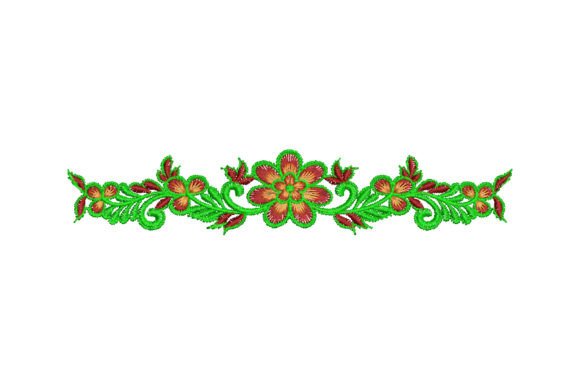
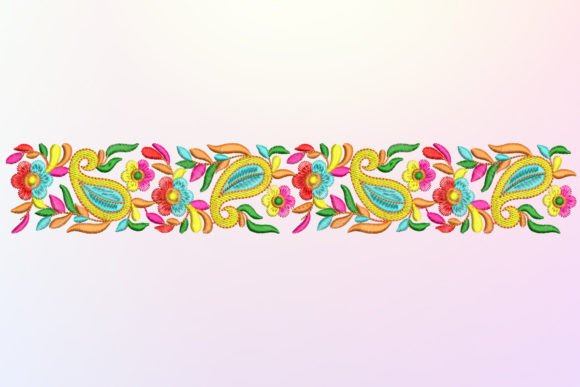
When I opened the Pinky Flowers Border embroidery file, I didn’t see just another floral border—I saw a quiet moment of charm. It’s not loud or fussy. The flowers are rounded, gentle in proportion, with soft petal curves and subtle leaf accents spaced just right to suggest rhythm without rigidity. There’s no aggressive satin stitch dominance or over-engineered fill density—just balanced stitch placement that breathes on fabric. It feels handmade, not mass-produced. That matters deeply when you’re stitching for clients, gifting for newborns, or building a boutique line where authenticity translates directly into perceived value.
A Real Project Test: Embroidering a Linen Tea Towel for a Local Kitchen Shop
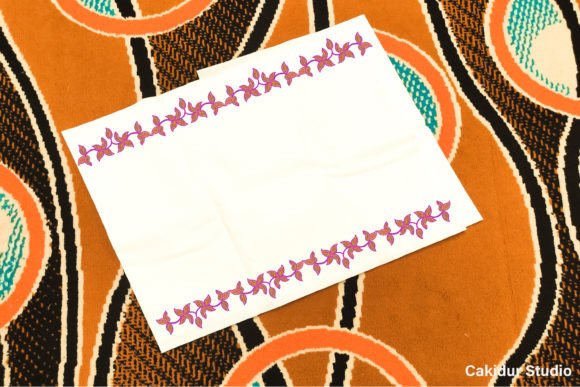
Last week, I used Pinky Flowers Border on a set of heavyweight linen tea towels for a small-town kitchen shop. We placed it along the bottom hem—3.5 inches tall, centered, stitched in pale blush pink thread on natural undyed linen. The result? Instant warmth. Customers paused at the display—not because it shouted, but because it whispered *care*. That’s the power of this border: it elevates everyday textiles without competing with function. It doesn’t overwhelm the towel’s utility; it honors it. For Etsy sellers or craft fair vendors, that subtlety is gold—it invites touch, encourages photos, and supports storytelling in product listings.
Where It Shines (and Where It Needs Thought)
Pinky Flowers Border excels in contexts where softness and intentionality matter:
- Custom apparel: Works beautifully on relaxed-fit sweatshirts, cotton aprons, and lightweight baby onesies—especially when paired with minimal topstitching or tonal thread.
- Personalized gifts: Perfect for monogrammed pillow covers, holiday napkin sets, or wedding guest towels. Its scale reads clearly at arm’s length but stays delicate up close.
- Small business merchandise: As a consistent design asset across tote bags, tea towels, and cap brims, it builds recognizable brand texture—think “botanical but approachable.”
- Digital embroidery file use: Holds up well in printable mockups. Renders cleanly in both light-on-dark and dark-on-light previews, making it reliable for Etsy thumbnails and social ads.
But—and this is where real-world experience kicks in—Pinky Flowers Border isn’t universally forgiving. On highly textured fabrics like bouclé or thick terry cloth, some finer petal outlines can blur. On stretchy knits (like ribbed baby bodysuits), stabilizer choice becomes non-negotiable—light tear-away alone won’t cut it. And while it reads well on dark fabric, avoid ultra-low-contrast thread pairings (e.g., charcoal gray on black denim) unless you’ve tested stitch definition first.
Design Integrity Meets Commercial Reality
As someone who reviews dozens of machine embroidery designs each month, I pay attention to how a design holds up under scrutiny—not just in the hoop, but in the customer’s hands. Pinky Flowers Border delivers clarity without stiffness. Petals aren’t over-digitized with unnecessary running stitches, and there’s no visible “jump stitch clutter” between elements—critical if you’re stitching on visible seams or curved edges like cap brims or patch backs.
That clean execution affects buyer trust. When a client sees crisp, confident stitching on their custom embroidered tote bag, they don’t just see a flower—they see craftsmanship. That perception lifts your pricing, strengthens repeat orders, and makes your handmade product feel intentional, not incidental.
Practical Notes Every Designer Should Run Through
Before committing Pinky Flowers Border to your next project, run these checks:
- Test on scrap fabric first—especially if using textured, sheer, or stretchy materials.
- Review stitch density. If your machine hesitates or fabric puckers during testing, consider reducing density slightly or switching to a lighter stabilizer combo.
- Confirm hoop size compatibility. This is a border design, so width matters more than height—but don’t assume it fits your smallest hoop without measuring.
- Inspect small details under magnification. Are inner petal lines legible? Do leaves taper cleanly? These define whether it reads as “designed” or “generic.”
- Try black-and-white mockups. Does the shape still carry visual weight without color? That tells you how well it’ll translate across branding applications.
- Compare light and dark backgrounds. Not just for contrast—see how shadows fall in fill areas. Some borders lose dimension on dark fabric if stitch direction isn’t varied.
- Use proper stabilizer. Medium-weight cutaway works best for structured items like patches or caps; tear-away + topping is ideal for towels and linens.
- Verify licensing. If you plan to sell finished products or include Pinky Flowers Border in digital embroidery bundles, confirm commercial rights upfront—don’t assume.
Final Thought: Not Just a Border—A Quiet Signature
Pinky Flowers Border won’t dominate your portfolio, and it shouldn’t. What it does—consistently, quietly, and professionally—is add grace. It’s the kind of embroidery file that earns compliments not for flashiness, but for fit: how naturally it belongs on a baby blanket, how thoughtfully it frames a hand-stitched apron, how effortlessly it elevates a simple kitchen towel into something worth gifting.
For craft business owners, Etsy sellers, and designers who treat every stitch as part of a larger story—this isn’t filler. It’s a considered detail. And in handmade markets, those details are what customers remember, photograph, and come back for.