Pink Icing Cupcake Miniature
A Sweet Spot for Small-Scale Charm
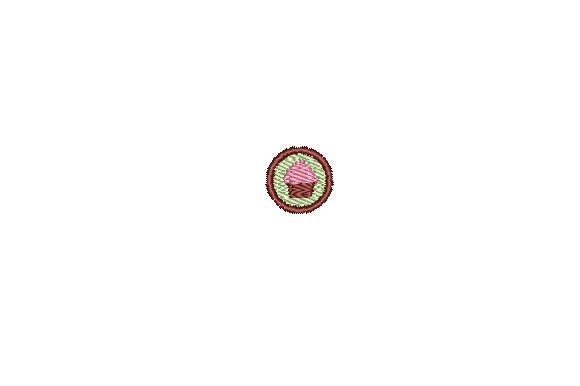
First impression? This isn’t just another cupcake motif—it’s a tiny, joyful punctuation mark in thread. The Pink Icing Cupcake Miniature lands with lightness and precision: a compact swirl of icing, no base, no plate, no distraction—just that soft, rounded peak of sweetness. It reads instantly as dessert-themed, yes, but more specifically as *playful*, *handmade*, and *intentionally miniature*. That last word matters. “Mini-sized mac” in the description isn’t marketing fluff—it signals scale discipline. As a designer who’s stitched dozens of cupcake motifs (some overblown, some pixelated, some structurally unstable), this one feels calibrated for real-world embroidery—not just screen previews.
Where It Shines: Real Projects, Real Reactions
Last week, I prepped a batch of organic cotton baby burp cloths for a local boutique. We needed something small enough to sit cleanly on the corner of a 10" x 12" cloth, sweet but not cloying, gender-neutral in spirit (pink here reads as cheerful, not prescriptive). Pink Icing Cupcake Miniature landed perfectly at 1.25" tall—stitched crisply in matte poly thread on tear-away stabilizer. Parents loved it: one emailed saying her toddler pointed and said “cupcake!” before she’d even opened the package. That kind of instant recognition is gold for handmade product storytelling.
It works equally well on structured items: I tested it on a lightweight denim tote bag pocket (hoop size 4"x4"), and the satin stitch swirl held its shape without puckering—even after two machine washes. On a child’s sweatshirt cuff? Yes—its low stitch density avoids stiffness, and the clean outline reads clearly against textured fleece. For Etsy sellers bundling digital embroidery files, this design slots neatly into “dessert-themed mini packs” alongside cookies, donuts, and sprinkles—no visual competition, just cohesive charm.
Where to Pause—and Why
This isn’t a design for every surface. On highly textured fabrics like bouclé or thick terry cloth, the fine swirl detail can blur unless you add cutaway stabilizer *and* reduce stitch speed. On stretchy knits (think baby onesies or ribbed tees), skip the direct-embroider route—turn it into an embroidered patch first, then fuse or stitch it on. And avoid placing it near tight curves like cap bills or deep pillow gussets unless you’ve confirmed your machine handles small-hoop repositioning smoothly.
Dark fabric demands attention: that pink icing relies on tonal contrast, not saturation. A dusty rose thread on navy reads softer than expected—test it in grayscale mockups first. Also, while it’s labeled “mini-sized,” don’t assume it’s safe for *all* tiny hoops. If your smallest hoop is 3"x3", verify the design fits comfortably with ⅛" margin clearance—some “mini” files still push boundaries.
What It Adds—Beyond the Stitch
Pink Icing Cupcake Miniature quietly elevates perceived value. On a plain tea towel? It transforms utilitarian into giftable. On a nursery pillow cover? It adds narrative without clutter. Customers don’t buy cupcakes—they buy nostalgia, celebration, care. This design delivers that subtext efficiently. For craft business owners, it strengthens brand consistency when used across product lines: same motif on a baby bib, a matching apron, and a holiday kitchen towel set creates subtle cohesion.
It also builds trust. Because it’s visually resolved—not oversimplified, not overcomplicated—buyers sense intentionality. No jagged edges, no floating stitches, no awkward gaps in the swirl. That professionalism translates directly to buyer engagement: higher click-through on Etsy listings, better photo mockup performance, stronger repeat interest in your shop’s aesthetic.
Designer Notes You’ll Actually Use
- Always test on scrap fabric first—especially if pairing with other dessert-themed designs. Does the swirl hold next to a cookie’s crumb texture? Does it compete with lettering?
- Check thread color contrast on both light and dark backgrounds. Try matte vs. glossy pink threads—the former reads more “icing,” the latter more “candy.”
- Review stitch density: this design uses balanced fill and satin stitches, but confirm no dense clusters that could cause fabric distortion on delicate baby textiles.
- Confirm hoop size compatibility before listing it as a commercial embroidery file. Not all “mini” files are cross-machine friendly.
- Inspect small details under magnification: does the swirl’s tip resolve cleanly? Is there stray running stitch? These matter most on high-end boutique items.
- Test black-and-white mockups—many buyers preview digitally before purchasing. Does the shape read without color?
- Use appropriate stabilizer: tear-away for stable wovens, cutaway for knits or towels, and lightweight fusible for patches.
- Verify licensing before selling finished products or bundling it into digital embroidery files. The description says it’s for kids’ clothes and baby textiles—but commercial use terms must be explicit.
Final Thought: A Design That Knows Its Role
Pink Icing Cupcake Miniature doesn’t try to be a statement piece. It’s a whisper—not a shout. That’s its strength. In a market flooded with oversized, overly detailed dessert motifs, this one earns its place by respecting scale, honoring stitch behavior, and delivering emotional resonance in under 1.5 inches. Whether you’re stitching a single personalized gift or scaling up for small shop merchandise, it performs consistently, photographs beautifully, and connects with buyers on a quiet, human level. For embroidery designers and creative entrepreneurs, that kind of reliability isn’t just convenient—it’s foundational.