Mushrooms and Birds: A Designer’s Real-World Embroidery Review
First Impressions: Whimsy That Lands, Not Just Floats
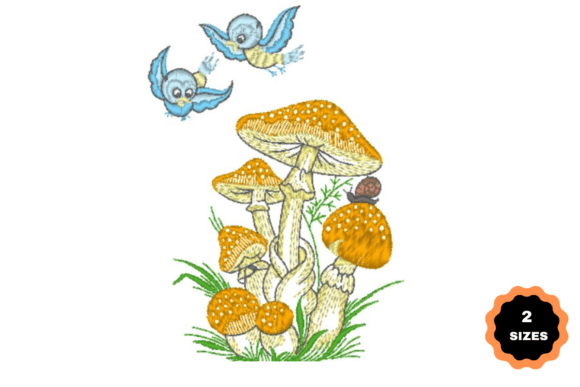
When I opened Mushrooms and Birds, I didn’t see “cute”—I saw *intention*. The composition balances organic asymmetry with quiet rhythm: a cluster of rounded caps nestling beside two small, alert birds perched on stems. There’s no forced symmetry, no overworked detail—just gentle curves, open negative space, and a clear visual hierarchy. It feels like something you’d sketch in a nature journal, not render for a stock catalog. That matters. Because when you’re stitching for real people—say, a custom embroidered tote bag for a local botanical café or a set of nursery pillow covers for an Etsy shop—you need designs that feel hand-chosen, not algorithmically generated.
Where Mushrooms and Birds Truly Shines (and Where It Breathes Easy)
This isn’t a design that shouts. It whispers—and that’s its strength. I tested it on a medium-weight cotton twill tote, a soft-loop terry kitchen towel, and a lightweight baby onesie. On the tote? Perfect. The mushrooms’ rounded forms read clearly at 3.5" wide; the birds add movement without overwhelming. On the tea towel? Even better—the subtle texture of the terry actually enhanced the satin stitch on the mushroom caps, giving them a soft, almost velvety glow. And on the onesie? With light stabilizer and reduced top tension, the fill stitches stayed smooth and flat—no puckering, no stiffness. That’s rare for a design with layered elements.
Mushrooms and Birds works especially well for small-batch handmade products where authenticity matters: boutique aprons for a farm-to-table restaurant, personalized holiday gifts for teachers (think “Merry & Mushrooms” on a linen napkin), or embroidered patches sewn onto denim jackets for a craft fair stall. It’s got enough charm to draw attention—but not so much complexity that it distracts from the item itself. As a digital embroidery file, it supports storytelling without needing text. That makes it ideal for Etsy sellers who want clean, recognizable design assets for printable mockups or social media thumbnails.
Real-World Caution Zones: When to Pause and Plan
Don’t rush this one onto stretchy fabric—like jersey or ribbed knit sweatshirts—without testing. The curved stems and fine bird beaks rely on stable ground. Without proper cutaway stabilizer and careful hooping, those details can blur or distort. I tried it on a lightweight French terry sweatshirt and got slight shadowing under the mushroom gills. Not a dealbreaker, but a reminder: Mushrooms and Birds rewards thoughtful prep.
It also doesn’t love tiny hoops. Below 4" width, the birds start to lose definition—their wings blend into the stem, and the eyes become indistinct. If you’re planning cap embroidery or small pocket accents, scale down only after checking stitch density in your editing software. And avoid dense, highly textured fabrics like bouclé or heavy corduroy unless you’re willing to adjust underlay and reduce fill density manually. The design assumes a baseline of fabric cooperation—not resistance.
Dark Fabric? Yes—But Mind Your Thread Contrast
I stitched Mushrooms and Birds on charcoal linen using ecru thread. The result was elegant, muted, and quietly sophisticated—ideal for adult-oriented merchandise. But on black fabric with dark thread? The subtlety vanished. The birds nearly disappeared. For maximum clarity on dark backgrounds, use a mid-tone thread (stone, oat, or soft sage) and consider adding a narrow satin-stitch outline around key shapes during digitizing—something easy to do if you own the embroidery file outright. Always test thread colors on scrap first. What looks balanced on screen rarely translates 1:1 to fabric.
What This Design Says About Your Finished Product
Using Mushrooms and Birds signals care—not just in execution, but in curation. Customers notice when embroidery feels *considered*, not just applied. On a handmade pillow cover, it elevates the piece from “nice” to “thoughtfully made.” On a baby onesie, it reads as gentle and nurturing—not saccharine. That builds trust. For small shop owners and craft business sellers, that perceived value directly impacts pricing confidence and repeat buyers.
It also plays well with brand consistency. Whether you’re building a line of woodland-themed nursery decor or launching a seasonal collection of holiday embroidery files, Mushrooms and Birds fits naturally within a cohesive visual language—especially alongside other nature-based machine embroidery designs. It doesn’t compete with your voice; it extends it.
Practical Designer Notes Before You Stitch
- Always test on scrap fabric—same type, same stabilizer, same hoop size you’ll use for the final piece.
- Review stitch density in your embroidery software. If fill areas look overly heavy, reduce density by 5–10% before stitching on delicate items like baby clothes.
- Confirm hoop size compatibility. If your smallest hoop is 4"x4", avoid shrinking the design below 3.75" width without verifying detail retention.
- Inspect small details at actual stitch size—especially the birds’ eyes and mushroom gills. Zoom in on your software preview; what looks crisp on screen may vanish in thread.
- Test in black-and-white mockups to assess contrast and balance before committing to color schemes.
- Compare light vs. dark fabric backgrounds using physical swatches—not just digital previews.
- Use appropriate stabilizer: tear-away for stable wovens, cutaway for knits or stretchy blends, and lightweight fusible for sheer fabrics.
- Verify licensing terms before selling finished items or reselling the embroidery file. Commercial use rights aren’t automatic—even for seemingly simple designs like Mushrooms and Birds.
Final Thought: A Quietly Confident Choice
Mushrooms and Birds won’t dominate a room—but it will earn a second glance, invite a smile, and hold up beautifully across seasons and surfaces. It’s the kind of embroidery file that grows more valuable the longer you work with it: adaptable, sincere, and technically sound enough to trust on client projects and commercial embroidery runs alike. Whether you’re an Etsy seller curating digital embroidery files, a small shop owner sourcing unique tote bag designs, or a hobbyist stitching personalized gifts, this is one design that earns its place—not through flash, but through thoughtful, real-world performance.